 Skip to content
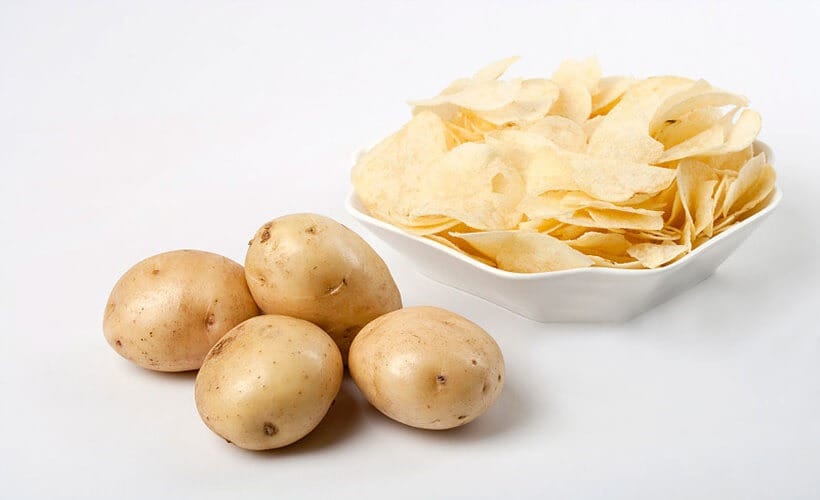
Potato chips (called potato crisps in the UK) are thin slices of potatoes fried until crisp and then seasoned. Today they are one of the most widely consumed snack foods in the world and a staple product in the snack manufacturing industry.
Different Names Around the World
The terminology for fried potatoes varies by country and often causes confusion:
| Region | Thin Slices | Thick Cut |
|---|---|---|
| United States | Potato chips | French fries |
| United Kingdom | Crisps | Chips |
| Other regions | Local variations | Local variations |
In Britain, “chips” refers to what Americans call French fries, while thin fried slices are known as “crisps”.
Who Invented Potato Chips?
There is no universally confirmed inventor of potato chips.
Many credit George Crum, a chef who allegedly created them in 1853 after a customer complained about thick fries. However, recipes describing thin fried potato slices existed as early as 1824, suggesting the concept may have developed gradually.
It is also likely that similar foods were made in homes before commercial production began.
Why Potato Chips Turn Golden Brown
Raw potatoes are white, but fried chips become golden yellow to brown due to a chemical reaction.
During frying:
-
Natural sugars react with amino acids
-
This creates browning and flavor compounds
-
Known as the Maillard reaction
Dark chips often result from:
-
Potatoes with high sugar content
-
Cold storage converting starch into sugar
-
Over-frying
Why Potato Chips Are Crispy
Crispiness comes from the structure of potato cells.
During frying:
-
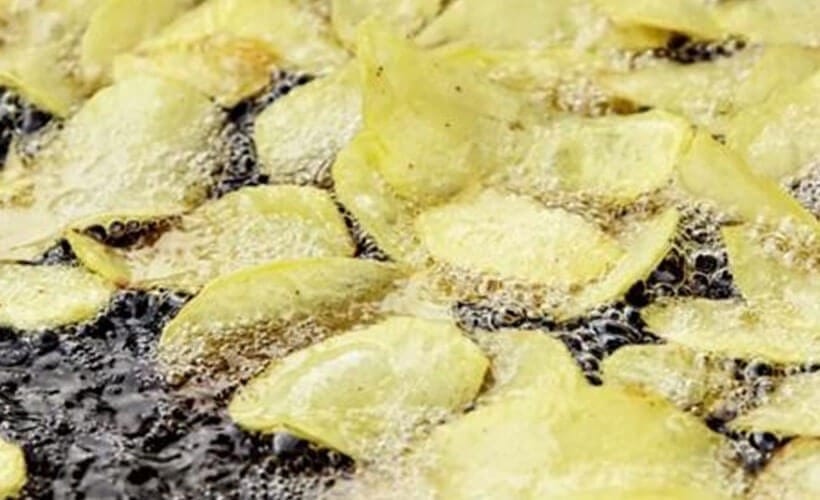
Water evaporates rapidly
-
Cells become dry and brittle
-
Biting causes tiny fractures → the “crunch” sound
Moisture destroys crispiness because the cells soften again.
How People Eat Potato Chips
Potato chips are extremely versatile:
-
Eaten as a snack
-
Dipped in sauces
-
Added to sandwiches
-
Crushed into casseroles
-
Used as coating for fried foods
-
Even eaten cold
Why Potato Chips Became So Popular
Today potato chips are the most popular snack in the United States, accounting for roughly 40% of snack consumption — surpassing pretzels and popcorn.
Their popularity comes from:
-
Strong flavor
-
Convenient packaging
-
Long shelf life
-
Wide variety of seasonings
Conclusion
Potato chips are more than just a snack — they combine culinary history, food science, and global culture. Their distinctive crunch comes from moisture loss during frying, their color from natural chemical reactions, and their popularity from convenience and flavor variety.
Understanding how chips work helps explain why they remain the world’s favorite snack and a cornerstone product in modern food processing.
