 Skip to content
The demand for potato chips remains stable worldwide, making the snack industry attractive for entrepreneurs. Many investors want to enter the market but the first question is always:
How much does it cost to start a potato chip business?
This guide explains the main cost components for launching a small-scale potato chip production project, helping you plan a realistic startup budget.
1. Facility Costs
Small chip production does not require a large factory.
Recommended space: 100–200 m²
This area is sufficient for:
-
Production area
-
Raw material storage
-
Finished product storage
Cost Characteristics
-
No complex infrastructure required
-
Rental expenses remain manageable
-
Suitable for startup businesses
Small workshops significantly reduce initial investment risk.
2. Equipment Costs (Main Investment)
Equipment is the largest expense in a potato chip business.
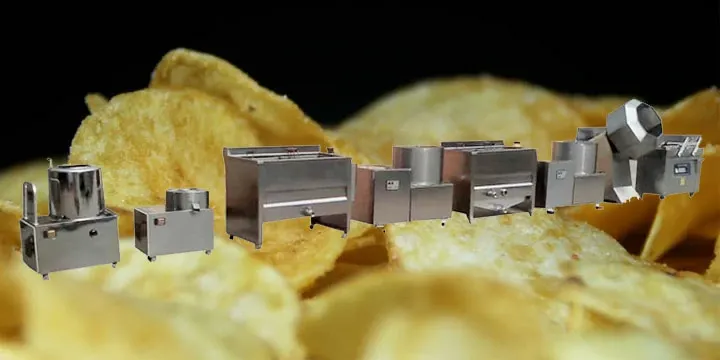
For a capacity of 100–200 kg per hour, a semi-automatic potato chip production line offers the best balance between cost and performance.
Main Machines Included
-
Washing & peeling machine
-
Slicing machine
-
Blanching machine
-
Frying machine
-
De-oiling machine
-
Seasoning machine
-
Packaging machine
Equipment Budget
Estimated investment: $20,000 – $50,000
Advantages
-
Low entry barrier
-
Short payback period
-
Easy operation
-
Low maintenance cost
-
Upgradeable to full automation later
For first-time investors, modular equipment reduces financial risk.
3. Labor Costs
Small production lines require minimal staffing.
Recommended workforce: 3–4 workers
| Task | Personnel |
|---|---|
| Washing & slicing | 1–2 people |
| Frying & seasoning | 1 person |
| Packaging & inspection | 1 person |
Automation keeps labor costs low while maintaining consistent output.
4. Other Operating Costs
Besides core expenses, you should also budget for ongoing operating costs:
-
Raw materials (potatoes, oil, seasoning)
-
Utilities (water, electricity, gas)
-
Packaging materials
These costs vary by region but remain manageable for small-scale operations.
Is a Small Potato Chip Business Profitable?
Because potato chips are a high-demand snack, small factories can scale gradually:
-
Start with semi-automatic production
-
Build local distribution
-
Expand capacity
-
Upgrade to full automation
The moderate startup cost combined with strong consumer demand creates solid profit potential.
Conclusion
Starting a small potato chip business does not require a massive investment. With a budget mainly allocated to equipment, a small workshop, and a small team, entrepreneurs can enter the snack manufacturing industry with relatively low risk.
Typical startup budget structure:
-
Facility: low cost
-
Equipment: $20,000–$50,000 (primary investment)
-
Labor: 3–4 workers
-
Operating costs: variable but controllable
A carefully planned small production line allows gradual expansion and sustainable growth in the snack market.
