 Skip to content
Potato is the second most important food crop in Kenya, after maize, and plays a vital role in food security, rural income, and agro-processing development. In recent years, potato production has increased significantly, creating strong opportunities for potato crisps (chips) processing businesses.
For investors, cooperatives, and food processors, Kenya represents a high-potential market where demand for packaged potato crisps continues to grow alongside urbanization and changing consumer habits.
This article analyzes potato production in Kenya, suitable potato varieties for crisps, profit potential, and how potato crisps processing machines support scalable commercial production.
Potato Production in Kenya: Market Overview
Kenya’s potato sector has shown steady growth over the past two decades.
-
In 2015, potato production was approximately 3.08 million tons
-
By 2019, production increased to around 4.5 million tons
-
Average yield rose from 61,770 kg per hectare (2014) to 185,185 kg per hectare (2016)
Potato farming is mainly concentrated in:
-
Central Highlands
-
Eastern Highlands
-
Rift Valley region
-
Slopes of Mount Kenya
-
Mount Elgon area in Western Kenya
These regions provide ideal climatic conditions for high-quality potato cultivation.
Potato Farming Structure in Kenya
Potato farming in Kenya is dominated by smallholder farmers.
According to the National Potato Council of Kenya:
-
There are approximately 800,000 potato growers nationwide
-
Total cultivated land is about 158,000 hectares
-
83% of farmers are smallholders operating 0.2–4 hectares
-
The remaining producers are medium-scale farmers with 2–10 hectares
This fragmented production structure creates both:
-
Challenges in raw material consistency
-
Opportunities for organized processing and contract farming
For processors, working with farmer groups or cooperatives is a key strategy to ensure stable supply.
Potato Varieties Suitable for Crisps Processing in Kenya
Potato crisps are one of the most popular snack foods in Kenya. However, not all potato varieties are suitable for crisps processing.
Studies and surveys indicate that the following varieties and clones are ideal due to:
-
Low reducing sugar content
-
Good frying color
-
Suitable dry matter levels
Recommended potato varieties for crisps in Kenya include:
-
Dutch Robin
-
Tigoni
-
Kenya Baraka
Processing-suitable clones:
-
39337.56
-
392657.8
-
3916A1.96
-
39338539
Among these:
-
Dutch Robin is currently the most widely used
-
Tigoni offers high yields with comparable crisps quality
-
Clones 3916A1.96 and 39338539 perform similarly to Dutch Robin in frying quality
Profit Potential of Potato Crisps Business in Kenya
Potato crisps processing has proven to be a high-margin agro-processing activity.
According to data from the Kenya National Farmers’ Federation (KENAFF):
-
Farmer groups of about 20 members process potato crisps collectively
-
One bag of potatoes costs around Ksh 2,500 (USD ~29)
-
Each packet of crisps sells for Ksh 20 (USD ~0.24)
-
One bag generates approximately Ksh 6,600 (USD ~77.6)
-
Net profit per bag is about Ksh 4,100 (USD ~48)
This demonstrates the strong value addition potential when potatoes are processed into crisps rather than sold as raw produce.
Market Demand and Industry Challenges
A survey conducted between 2009–2010 identified:
-
24 registered potato crisps brands in Kenya
-
About 90% of processors were small and medium enterprises (SMEs)
Main challenges reported:
-
64%: Lack of suitable potato varieties and inconsistent raw material quality
-
43%: Financial constraints limiting production scale
-
40%: Lack of proper processing equipment and market access
These challenges highlight a clear need for:
-
Improved processing technology
-
Efficient potato crisps making machines
-
Scalable, hygienic production solutions
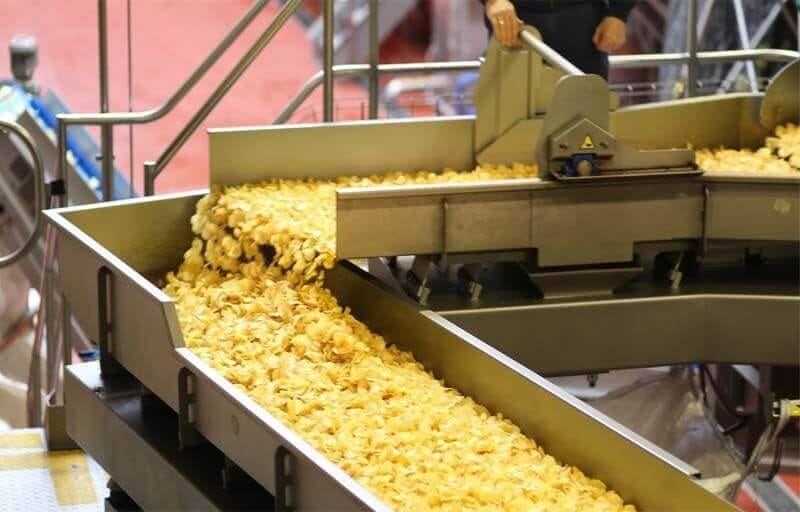
Role of Potato Crisps Making Machines in Kenya
Modern potato crisps production machines help processors overcome key limitations by:
-
Improving product consistency and quality
-
Increasing output capacity
-
Reducing labor dependency
-
Enhancing food safety and hygiene standards
For SMEs and growing brands, semi-automatic or automatic potato chips lines enable:
-
Expansion into supermarkets and distributors
-
Compliance with food safety regulations
-
Higher profit margins through efficiency
Is a Potato Crisps Processing Project Right for You?
Potato crisps production is well suited for:
-
Agribusiness investors
-
Farmer cooperatives
-
Food processing startups
-
Existing snack manufacturers looking to expand
With strong local demand, growing urban markets, and abundant potato supply, Kenya offers excellent conditions for scalable potato crisps processing projects.
👉 Project Consultation & Equipment Inquiry
If you are planning to:
-
Start a potato crisps processing business in Kenya
-
Upgrade from manual frying to mechanized production
-
Source reliable potato crisps making machines
-
Design a small or medium-scale processing line
We recommend consulting with an experienced potato processing equipment supplier to match your capacity, budget, and market goals.
📩 Contact us today to receive technical specifications, production solutions, and customized quotations for potato crisps processing machines.
Summary
Kenya’s growing potato production and strong consumer demand for potato crisps create significant opportunities for agribusiness investment. While smallholder farming dominates raw material supply, modern potato crisps processing machines enable consistent quality, higher output, and improved profitability. With the right equipment and project planning, potato crisps processing can become a sustainable and scalable business in Kenya.
